CONSUMER CONTRACTS · AUSTRALIA
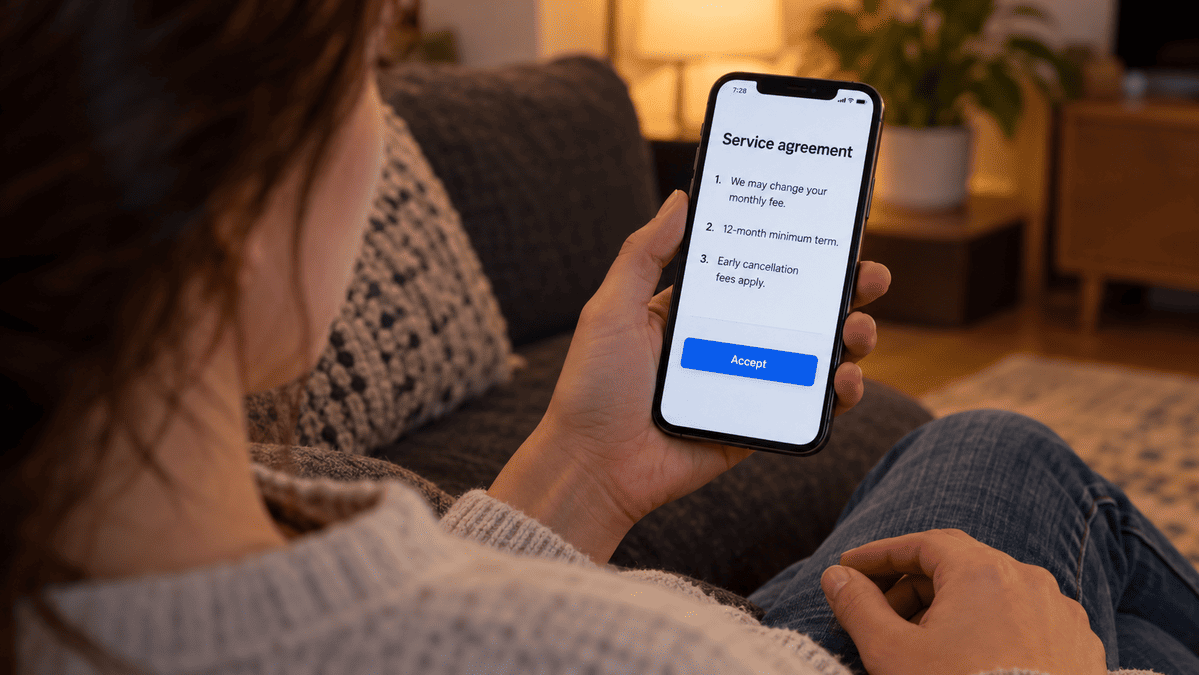
Look for terms that let a business change the deal, keep taking payments or limit its responsibilities while leaving you with little practical choice. The most useful question is: what can the business do under this clause, and what can I do in response?
Unfair contract terms in Australia can appear in everyday agreements, including gym memberships, subscriptions and household services. A signature or an “I agree” click does not, by itself, settle whether every term is enforceable. Equally, a condition you dislike is not automatically legally unfair.
First, check whether these protections apply
The Australian Consumer Law protects individuals against unfair terms in standard form consumer contracts for goods, services and interests in land acquired wholly or mainly for personal, domestic or household use. A standard form agreement is generally prepared by the business and offered with little meaningful room to negotiate. The NSW Government’s guide to consumer contracts explains this starting point.
Choosing a membership tier or correcting your contact details does not necessarily turn a pre-written agreement into a negotiated contract. Focus on whether you could meaningfully change the obligations that matter.
For contracts made or renewed on or after 9 November 2023, stronger rules prohibit businesses from proposing, using or relying on unfair terms, with penalties available. The changes also apply to terms varied or added from that date. Earlier contracts are not automatically outside all protection; their dates and later changes need checking. See the ACCC’s explanation of the contract law changes.
What makes a term legally unfair?
Under section 24 of the Australian Consumer Law, three elements must be present: a significant imbalance between the parties’ rights and obligations; a term that is not reasonably necessary to protect the advantaged party’s legitimate interests; and financial or other detriment if the term is applied or relied on.
The assessment also considers transparency and the contract as a whole. Clear language, legible print and readily available terms matter, but clarity alone does not make an imbalanced clause fair. Another provision may offset the problem. These principles come from sections 24–26 of the Australian Consumer Law.
Five clauses worth slowing down for
The law identifies several types of potentially unfair terms, including one-sided changes, termination rights and restrictions on taking legal action. Consumer Affairs Victoria’s unfair terms guidance gives examples. The following checks help you examine the wording; they are not automatic findings that a clause is unlawful.
01 Changes the business can make on its own
Read the clauses about fees, service features, access and operating hours together. Does the business reserve a broad power to change them? What notice must it give, and can you leave without a cancellation charge if a significant change does not suit you?
Ask for the actual limits on the power. “We will always be reasonable” in a sales conversation is less useful than a written explanation of when a change can happen and what options follow.
02 A renewal you could easily miss
Automatic renewal deserves attention, especially where a short cancellation window commits you to another long term. Find the initial end date, renewal period, notice deadline and accepted cancellation method. Check whether the business must remind you before renewal.
Renewal itself is not proof of unfairness. The concern is how the arrangement operates overall: whether the next commitment is clear and whether you have a workable opportunity to decline it. Put the deadline in your calendar before accepting.
03 An expensive or difficult exit
Separate leaving because you have changed your mind from leaving because the business has failed to provide what it promised. Then check what the agreement says about each. A clause that imposes substantial obligations on you while giving the business broad freedom to walk away warrants closer review.
If a cancellation amount is unclear, ask for a worked calculation using your proposed cancellation date. Identify whether it includes remaining membership payments, a separate fee or both. Do not assume a stated charge is valid simply because the agreement calls it an administration cost.

04 Broad exclusions of responsibility
Watch for wording that appears to excuse the business from every failure, including failures within its control. Ask what happens if the service is unavailable or materially different from what was agreed.
A separate issue is any attempt to remove your statutory consumer guarantees. A blanket “no refunds” statement cannot take away those rights. However, a change-of-mind refund is a different question, and the available remedy depends on the circumstances. The ACCC’s guide to consumer rights and guarantees explains the distinction between legal rights and extra promises.
05 The business gets the final say in every dispute
Be cautious about clauses that appear to let the business alone decide what the agreement means, whether you breached it or what evidence you may use. Also examine requirements that make challenging a decision impractical. Ask for the complaints process and check whether the clause attempts to restrict access to independent resolution.
A membership change, in context
Hypothetical example: A 12-month gym agreement lets the operator substantially reduce access hours whenever it chooses. The member must keep paying for the remaining term, even if the new hours make attendance impractical.
That combination raises questions about imbalance, justification and detriment. Now suppose the agreement limits the circumstances for changing hours, requires advance notice and offers a genuine fee-free exit for a substantial reduction. Those safeguards would be relevant to assessing the agreement as a whole.
The lesson is to read the change clause alongside the notice and exit clauses. This example illustrates the legal test; it is not a ruling on any particular membership.
An expensive deal is a different question
The unfair terms rules generally do not assess provisions to the extent they define the main subject matter, set the disclosed upfront price, or are required or expressly permitted by law. Certain other statutory exclusions also apply. A contingent charge is not automatically part of the protected upfront price simply because it appears in the document. See the statutory exclusions in section 26.
For your own review, separate “this costs more than I want to pay” from “this gives the business a power that could leave me worse off”. Both may influence your decision to sign, but they raise different legal questions.
Loans, credit cards and other financial products and services fall under a separate unfair terms regime administered by ASIC. Some insurance contracts are covered, with specific exclusions and timing rules. Use ASIC’s consumer contract protections guidance when checking a financial agreement rather than assuming every consumer-law example transfers directly.
If you have already agreed, make the issue specific
Start with the clause and its practical effect. A focused complaint gives the business something concrete to address. Keep a copy of the version you accepted, including linked terms, plus any renewal notice, changed pricing, relevant emails and payment records.
- Identify the wording. Quote the clause number and explain what the business says it allows.
- Explain the impact. Describe the charge, restriction or other detriment, and ask why the term is needed.
- State the outcome you seek. This might be a revised term, a disputed charge being withdrawn or an agreed exit. Request a written response.
- Choose the appropriate next step. For ordinary consumer goods and services, contact your state or territory consumer protection agency. The ACCC accepts reports but does not resolve individual disputes.
For a financial complaint, raise the issue with the firm first. If it remains unresolved, the Australian Financial Complaints Authority’s complaints service may help where the firm is a member and the complaint falls within its rules and time limits. AFCA provides free, independent dispute resolution.
Only a court can make a final determination that a term is unfair. An unfair term is void, while the rest of the agreement can continue if it can operate without that term, as the ACCC’s explanation of court decisions sets out. Do not assume a concern cancels the entire agreement or makes stopping payments consequence-free; get advice about your obligations if the dispute remains unresolved.
Before signing, ask the business to explain the clause you cannot live with and put any agreed change in writing. After signing, preserve the evidence and challenge the specific term. In either situation, knowing how a clause could operate is more useful than accepting reassurance that it is “just standard wording”.
General information for Australian readers, checked 28 October 2026. This article is not legal advice. Contract type, timing and applicable laws can affect your position; seek advice about a specific agreement.